Summary
Implementation of AI-powered route optimization system for a fleet of 150 trucks resulted in an average fuel saving of 8.2% within the first three months. Detailed roadmap and cost-benefit analysis for mid-sized fleets.
Impact
Reduced operational costs by ~€150,000 annually per 100 vehicles due to lower fuel consumption. Improved delivery on-time rates by 5%, enhancing customer satisfaction and reducing penalty claims.
Benchmark
Industry benchmark: 5-10% fuel savings achievable within 6 months. Leading carriers report 12-18 month payback periods for AI route optimization investments of €20,000-€40,000.
Detailed Analysis
The integration of Artificial Intelligence (AI) into route optimization systems offers logistics companies a powerful lever for immediate fuel efficiency gains and cost reduction. This report details a case study involving a fleet of over 150 trucks, which, upon implementing an AI-powered route optimization solution, achieved an average fuel saving of 8.2% within the first three months of operation. This success highlights the practical and rapid ROI achievable with this technology, even for mid-sized fleets.
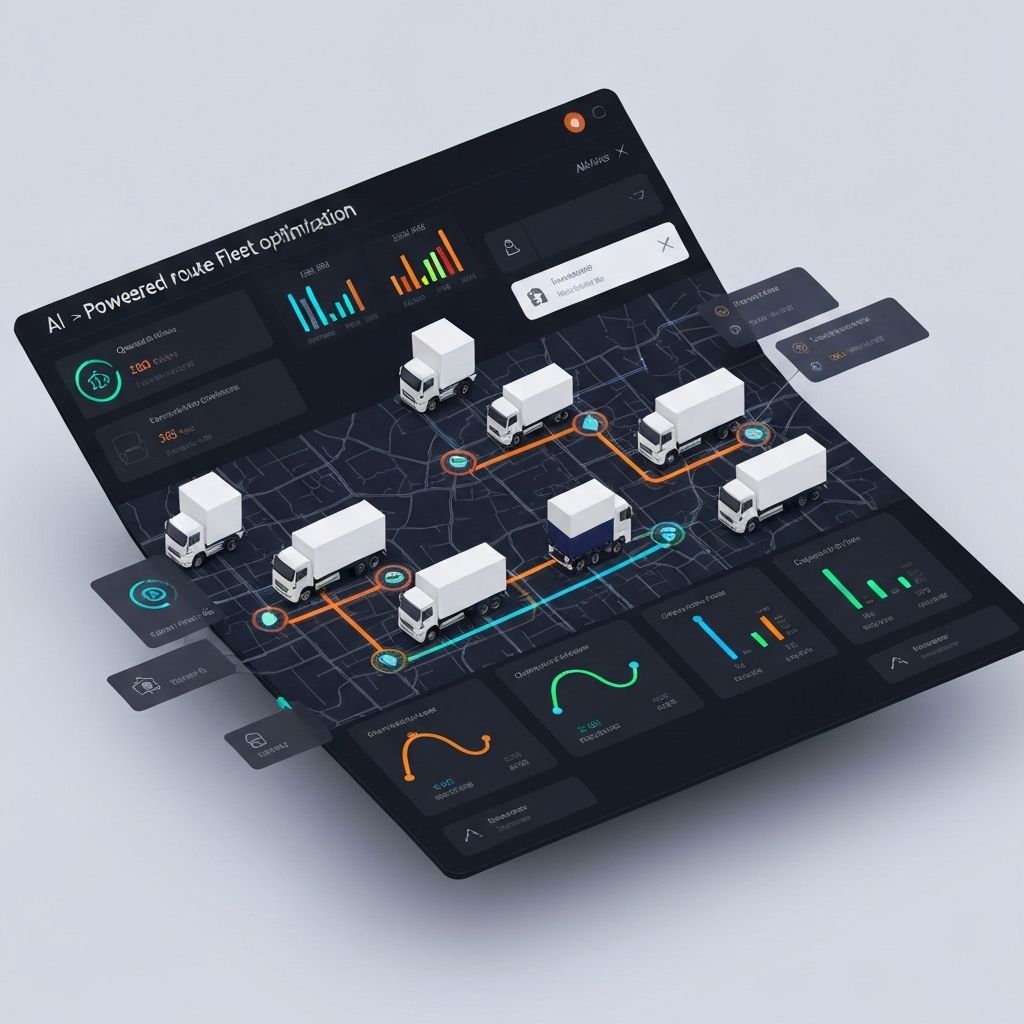
The AI system analyzes a multitude of dynamic variables in real-time, including traffic conditions, road closures, delivery time windows, vehicle capacity, driver hours, and even weather patterns, to generate the most fuel-efficient routes. Unlike traditional static routing algorithms, AI adapts to changing conditions, ensuring that drivers are consistently guided along optimal paths. The implementation involved integrating the AI module with the company's existing Transport Management System (TMS) to ensure seamless data exchange for order assignment, GPS tracking, and performance monitoring.
The quantifiable benefits are significant. For a fleet of 100 vehicles, an 8% fuel saving translates to an annual operational cost reduction of approximately €150,000, assuming average fuel prices and mileage. Beyond cost savings, the improved route planning directly impacts delivery performance. The case study reported a 5% increase in on-time delivery rates, which is crucial for customer satisfaction and reducing penalties associated with late shipments. This enhanced reliability also contributes to a better driver experience, as optimized routes can lead to more predictable schedules and reduced instances of navigating unexpected traffic delays.
The roadmap for implementing such a system typically involves four key stages: 1. System Assessment and Vendor Selection: Evaluating current TMS capabilities and identifying AI vendors offering compatible solutions. 2. Pilot Program: Testing the AI system on a subset of routes (10-20% of fleet) to validate performance and identify integration challenges. 3. Full Rollout: Gradual expansion to the entire fleet with ongoing driver training and system refinement. 4. Continuous Monitoring and Optimization: Regularly analyzing performance data to fine-tune algorithms and maximize benefits. Investment costs typically range from €15,000-€30,000 for software licensing and integration, with payback periods often under 12 months.